Do You Need the Latest AI Model for Your Business?
No, you don't need GPT-6 Astra, or any other frontier model, to run an effective AI-powered business. What decides whether AI actually helps your firm is whether the workflows built on it are reliable and used every day, not which model badge sits behind them.
Key Takeaways
- OpenAI released GPT-6 Astra on 3 September 2026, and co-founder Greg Brockman framed it as the start of the "AGI era" (VentureBeat, 3 September 2026) — though OpenAI itself qualified the claim as "not unreasonable," not settled.
- Only 11% of small and micro Australian businesses reported using AI in their workplace in the 2024–25 Business Characteristics Survey (Australian Bureau of Statistics, released 25 June 2026).
- Frontier labs are shipping new models roughly every few weeks — Claude Opus 5, Claude Sonnet 5, Gemini 3.1 Pro and GPT-6 Astra all launched within an seven-month span. No SMB can rebuild its systems on that cadence, and none needs to.
- The gap that matters isn't between GPT-5 and GPT-6 Astra. It's between firms with a working AI system and the roughly nine in ten small businesses that don't have one yet.
What did OpenAI actually announce with GPT-6 Astra?
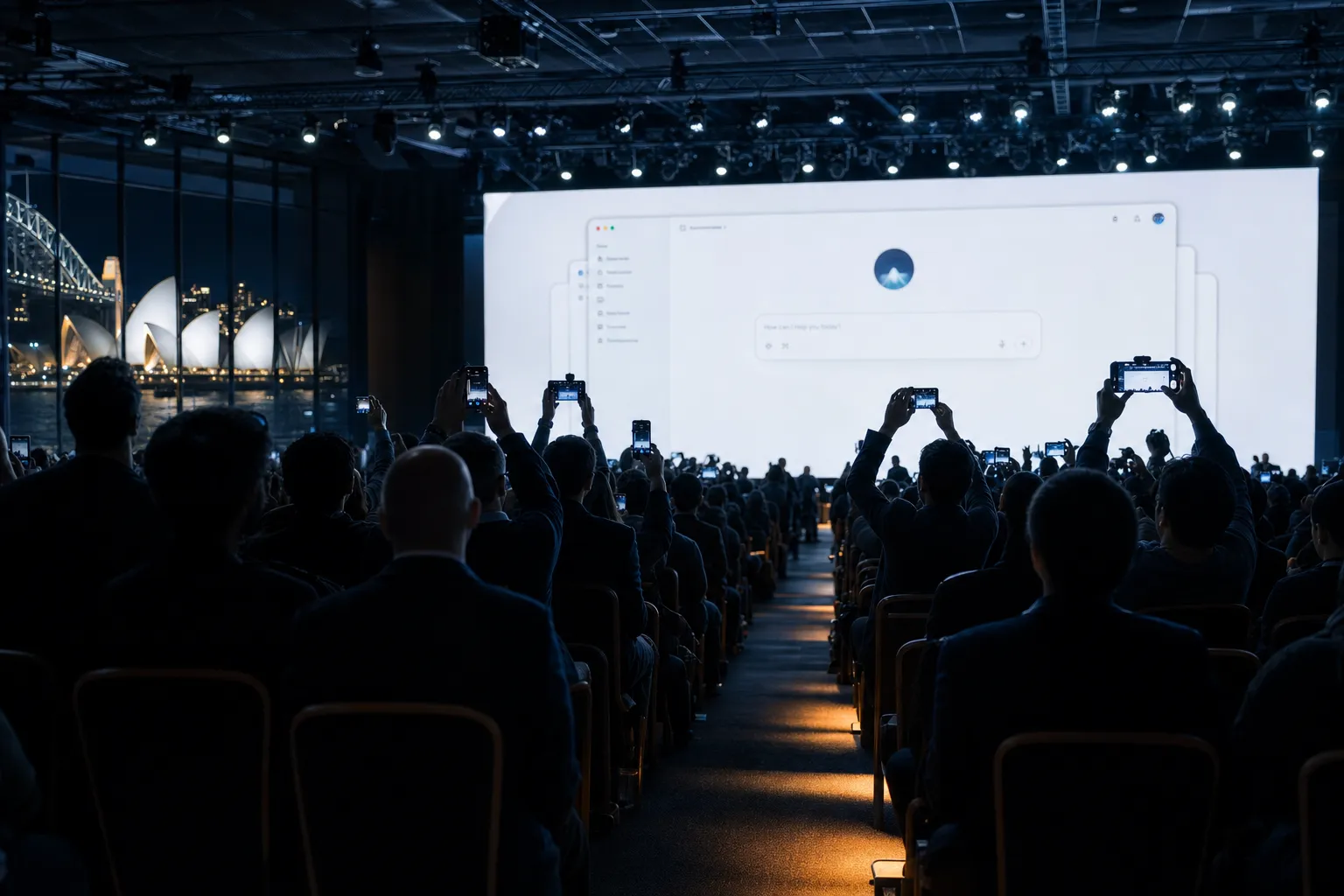
OpenAI released GPT-6 Astra on 3 September 2026. It began rolling out to enterprise customers on OpenAI's Daybreak access program two days later, with ChatGPT Plus, Pro, Business and Enterprise access following within days (VentureBeat, 3 September 2026). Co-founder Greg Brockman closed the launch briefing with "Welcome to the AGI era." AGI (artificial general intelligence, a system able to perform most economically valuable work as well as a human) is the industry's long-stated goal.
When asked directly whether Astra qualifies, Brockman hedged: "I think it's not unreasonable to feel that we are now in the AGI era." That's a company managing a narrative, not a scientific consensus. The same coverage noted that Astra's headline 98.6% score on the ARC-AGI-3 benchmark depends heavily on the surrounding system architecture, not the model alone. OpenAI also notably left out results from GDPval, its own benchmark for real-world occupational tasks.
Astra's genuinely new capability is computer use: it can navigate spreadsheets, CRM systems and browsers the way a person does, completing multistep tasks rather than just describing how to do them. That's a meaningful jump for automation vendors. It's not, on its own, a reason for a 12-person accounting firm to change anything before lunchtime.
How fast are frontier AI models actually being released?
Faster than at any point since ChatGPT launched, and that pace is the real story for SMB owners weighing "which model" decisions. In the seven months before Astra shipped, the industry saw Google's Gemini 3.1 Pro (February 2026), Anthropic's Claude Sonnet 5 (June 2026) and Claude Opus 5 (July 2026), on top of OpenAI's own GPT-5 point releases. A frontier model — the newest, most capable release from a leading AI lab — now has a shelf life measured in weeks, not years.
That's precisely why "buy the latest model" is a losing strategy for a business, not a winning one. If you rebuilt your workflows around every release, you'd spend more time migrating than working. The labs compete on being first; your firm competes on being reliable to clients. Those are different games, and playing the wrong one is expensive.
How many Australian businesses are actually using AI today?
Far fewer than the GPT-6 Astra headlines would suggest. The Australian Bureau of Statistics' 2024–25 Business Characteristics Survey covered nearly 7,000 businesses from October 2025 to February 2026. It found that around 11% of small and micro businesses, and 22% of medium businesses, reported using AI in their workplace — against 35% of large businesses (ABS, released 25 June 2026).
A separate NAB SME Business Insights report found 42% of small and medium businesses already using AI, with 44% not using it and 14% planning to start (NAB, 20 April 2026). "We're seeing a clear shift from curiosity to practical use," said NAB Group Executive Pete Steel. The two surveys don't contradict each other so much as measure different things: NAB's own business-banking customers skew more digitally engaged than the ABS's full sample, and each survey uses a different threshold for what counts as "using AI."
The exact percentage matters less than the pattern: somewhere between roughly one in ten and four in ten Australian SMBs have adopted AI in any structured way. Either reading puts most firms, including most professional-services firms, well behind the frontier-model news cycle. If your competitors haven't even started, matching OpenAI's release schedule was never the task in front of you.
Why doesn't picking the newest model matter as much as people think?
Because the failure mode for most SMBs isn't "using an outdated model" — it's having no reviewed, monitored AI workflow at all. A law firm using last year's model for client intake, with someone checking the output, will outperform a firm that switches models every quarter but never audits what the AI actually produces.
There's also a concentration-cost most owners underrate. Every time you chase a new release, you re-test prompts, re-train staff and re-verify outputs against your compliance obligations. Do that every six weeks and you've built a maintenance job, not a business advantage. AI Smarter's own methodology treats the model as one layer among five — Context, Data, Intelligence, Automation and Leverage. That's deliberate: the model is the layer that changes fastest, so it should be the easiest one to swap out, not the one you rebuild everything around (see how we sequence this on the AIOS page).
What should a professional-services firm do instead of waiting for the next model?
Pick a system with dependable workflows now, and treat the underlying model as replaceable plumbing. Concretely: define two or three admin-heavy processes worth automating (client intake, document drafting, meeting follow-ups), connect them to the tools you already run, and put a human review step on anything client-facing. That structure survives a model upgrade; a one-off ChatGPT habit does not.
Review the setup on a fixed schedule, quarterly is reasonable, rather than reactively every time a lab announces a launch. A quarterly review lets you ask a narrower, more useful question: has this specific new model measurably improved a task we already automated, in a way that justifies re-testing it? Most releases will fail that bar. Some genuinely won't, and that's the one worth acting on. Firms we've worked with take this approach across our case studies, and it holds up across accounting, legal and advisory practices alike.
When does upgrading to a newer AI model actually matter?
Three situations, and none of them is "a lab called it AGI." First, a genuine capability gap: your current model can't reliably do a task you need (Astra's computer-use ability is a real example for firms wanting an AI to operate software directly, not just draft text). Second, a security or compliance driver: a vendor deprecates the model you're on, or a new safety framework changes what's appropriate for handling client data. Third, a measured cost or accuracy improvement you've actually tested against your own workflow, not a benchmark score from the vendor's own launch materials.
FOMO isn't on that list. Neither is a press conference. If a change doesn't map to one of those three reasons, it's marketing working as intended, not a decision your business needs to make this week.
The next step
GPT-6 Astra will not be the last model called an AGI moment, and the next one won't need your firm to react either. What Australian professional-services firms need is a system that keeps working through every model change underneath it — reviewed, monitored, and sized to a 5-to-50-person team rather than a frontier lab's roadmap.
Want a second opinion on whether your current AI setup, or lack of one, is solid enough to leave alone until your next quarterly review? Book a free initial AI consultation and we'll tell you plainly.